


Welcome to the latest edition of The API Economy. Thanks for being here.
To support the API Economy, join the 13,007 early, forward-thinking people who subscribe for insights on the forefront of technology, crypto, AI, and other emerging trends.
Marc Andreessen has called the failure to build payments into the internet one of its original sins. The original web was designed to move information between computers, but not money. HTTP standardized how a client requests a resource and how a server responds. It even reserved status code 402 for “Payment Required.” But no native payment mechanism was ever built around it.
So we collectively built in workarounds. Credit cards, payment processors, subscriptions, API keys, billing accounts, invoices, and checkout pages were all layered on top of the web. These systems work because a human can create an account, enter a card number, choose a plan, and approve a purchase.
This internet economy works for people, but is limited for agents.
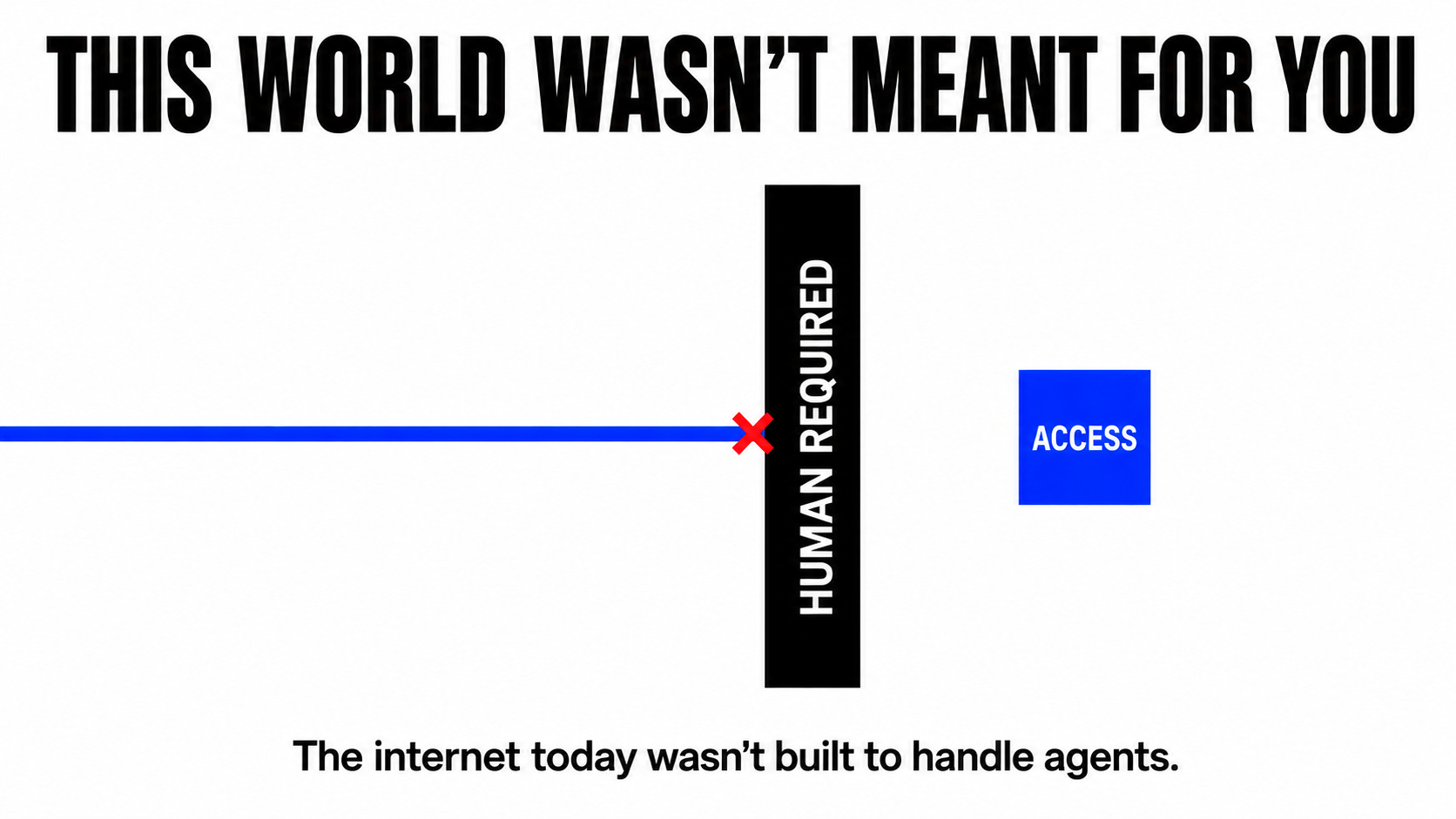
Agents do not use the internet the same way that people do. They call APIs, query databases, purchase compute, invoke models, retrieve documents, and interact with other software. A single task can generate dozens or hundreds of these interactions.
If agents are going to become meaningful economic participants, they need a way to pay and operate at the same speed and granularity as software does.
That is the problem x402 is designed to solve.
Giving HTTP 402 a purpose
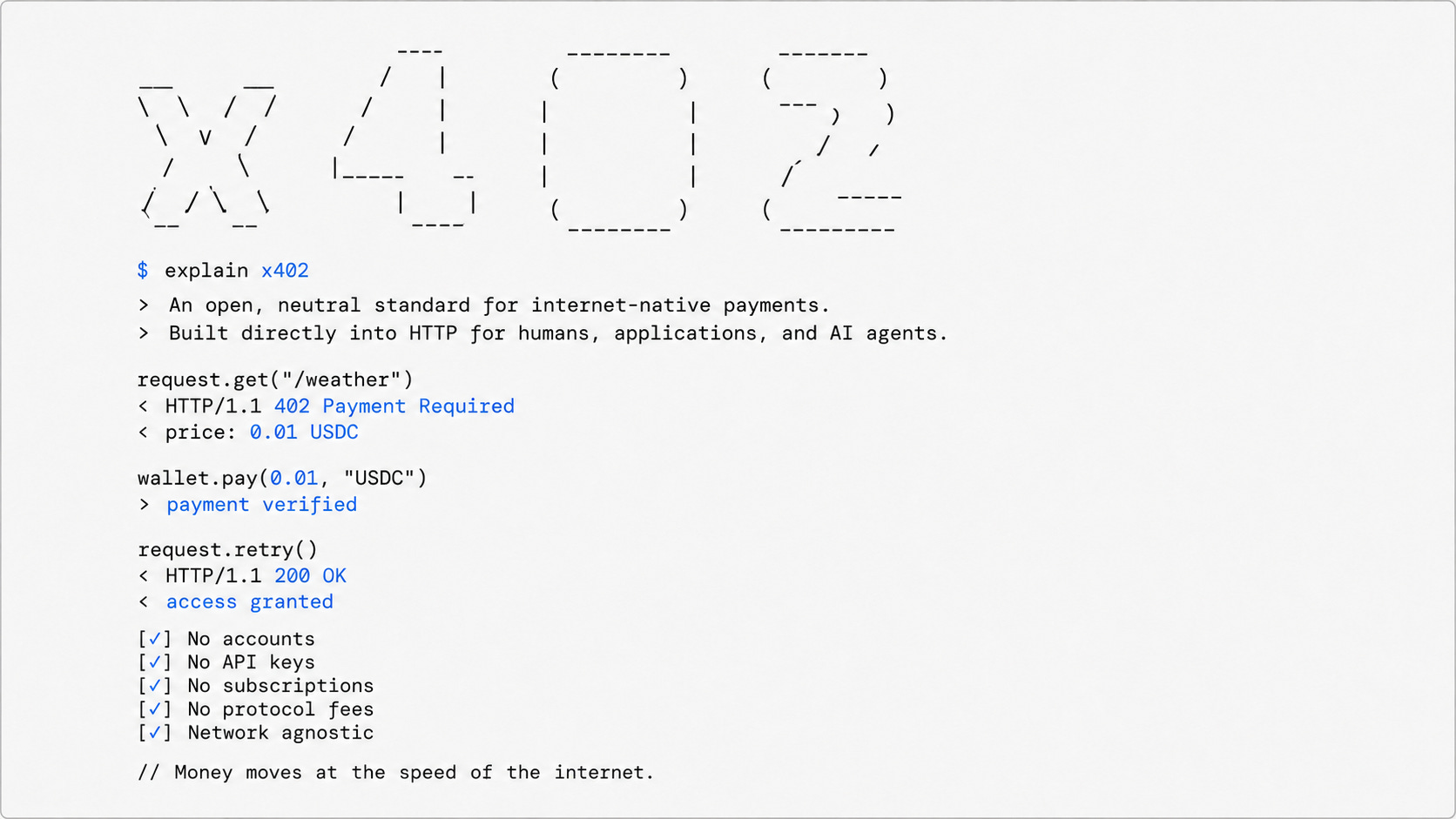
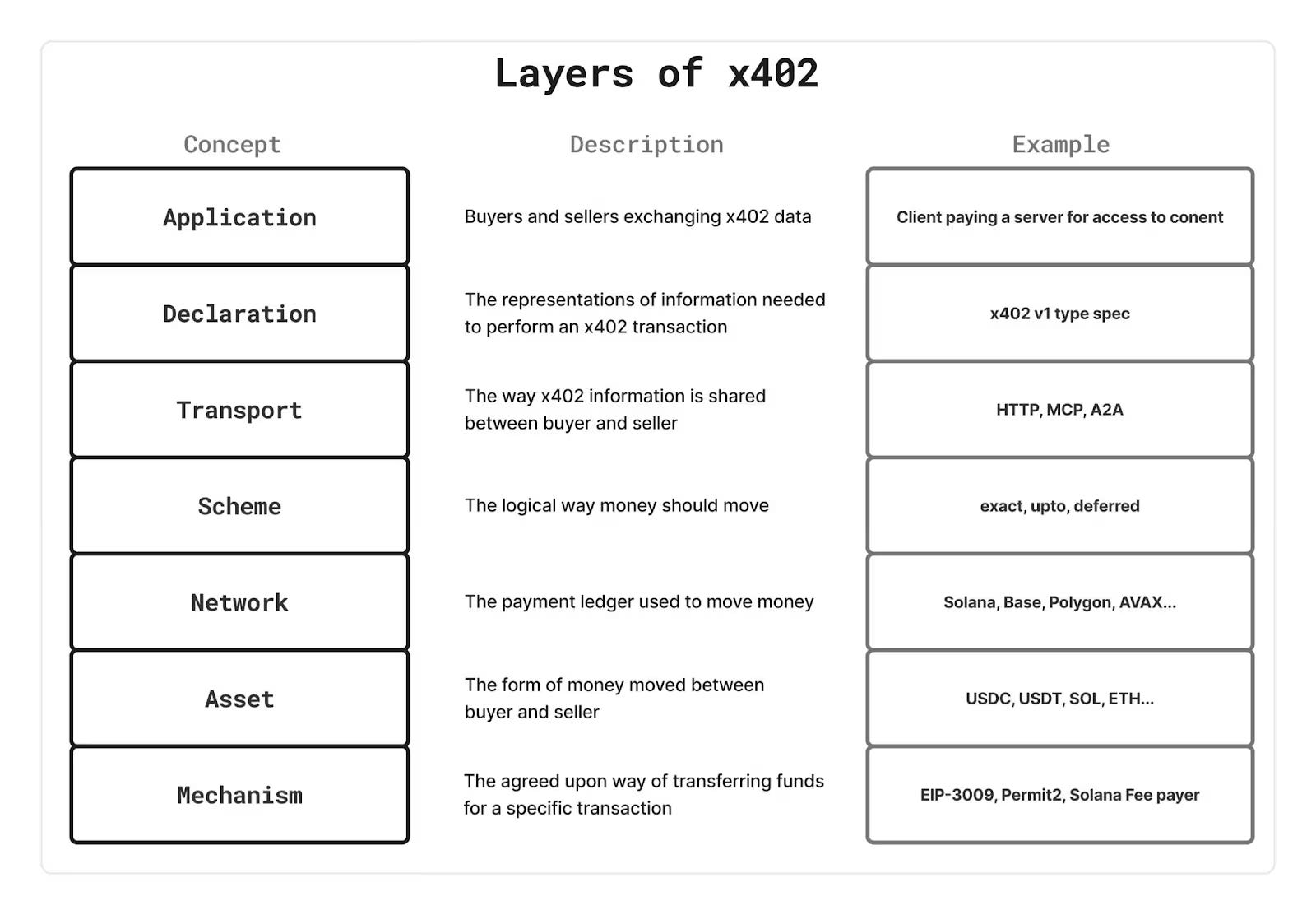
x402 is an open payment standard built around the unused HTTP 402 status code. A client requests a resource. If payment is required, the server responds with a price and payment instructions. The client pays, retries the request, and receives the resource.
The entire process can happen programmatically inside HTTP. No checkout page, subscription, API key, or human approval is required for each transaction.
Today’s payment infrastructure has a minimum efficient transaction size. Artemis estimates that a typical card payment averages roughly $0.03 to $0.04 of fixed cost before interchange. A $0.003 API call is therefore uneconomic on card rails before percentage fees are even considered.
Stablecoins (like USDC) on low-cost blockchain networks (like Base, Solana, and Arc) can settle transactions worth fractions of a cent, which makes a different business model possible.
Instead of selling access to an API for a monthly subscription fee, a provider could charge $0.001 per request using a tool like Routavo. This replaces the economics of accounts and plans with the economics of requests and payments.
The early data suggests the model is gaining traction. x402 currently reports roughly 75 million transactions and $24 million in payment volume over the last 30 days, across about 22,000 sellers.
Artemis estimates that since October 2025, x402 has processed more than 180 million agentic payments representing $47.5 million. These figures are still small compared with traditional payments. The important thing to note is the rate at which machines are exponentially starting to generate economic activity.
Agents change the transaction curve
In February 2026, agentic token consumption crossed human token consumption on OpenRouter. By August, agentic usage had reached roughly 7.3 trillion tokens on a seven-day average, several times the level generated by humans.


The significance is not that agents consume more tokens. It is that agent activity compounds differently from human activity.
A person might make one purchase after ten minutes of research. An agent can make hundreds of API calls during those same ten minutes. One agent can also spawn sub-agents, invoke multiple models, purchase data, compare services, and retry failed tasks. One human instruction can therefore produce an entire chain of machine transactions.
If 1 million agents each make 100 paid requests per day at an average price of $0.001, that produces: 1,000,000 × 100 × $0.001 = $100,000 per day.
At one billion paid requests per day, the same transaction size generates $1 million of daily commerce. At one trillion requests, it produces $1 billion.
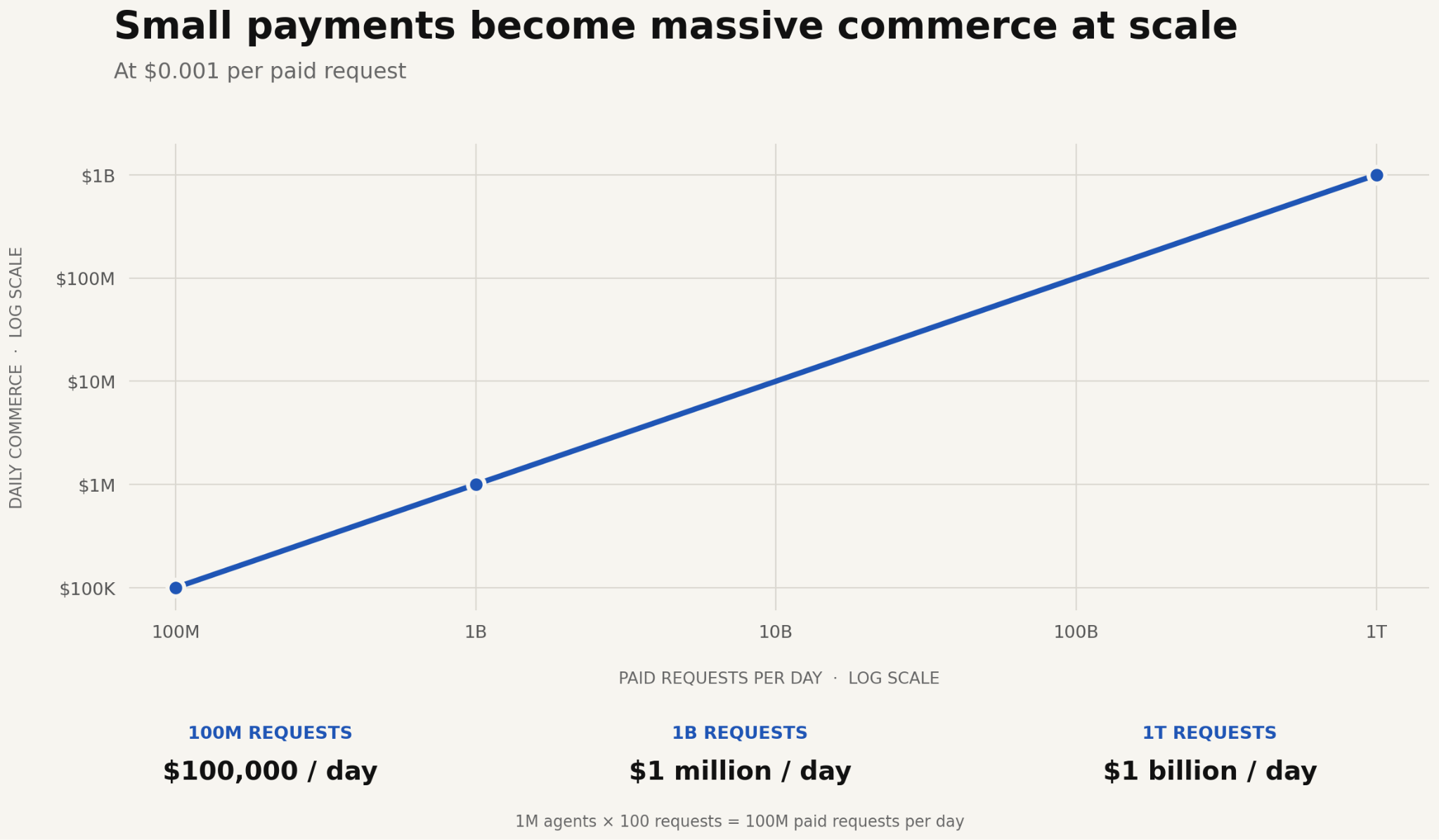
A tenth of a cent is irrelevant to most human commerce. At machine scale, it is a viable economic unit.
This is why the rise of agents and x402 fit together. The internet’s existing payment infrastructure assumes relatively few, relatively large transactions initiated by people. Agents create the opposite environment: extremely high transaction counts, very small transaction values, and no tolerance for manual checkout.
The API economy meets the agent economy
The API economy made it possible for software to communicate with software. The agent economy adds another requirement: software must have all the tools to act autonomously on the internet.
Agents need to discover a service, determine its price, decide whether the expected value exceeds the cost, pay for it, consume the result, and continue executing. Each step needs to be machine-readable.
x402 is an attempt to make payments part of that loop rather than a separate business process. Agentic activity is already growing rapidly before agents have a mature economic infrastructure.
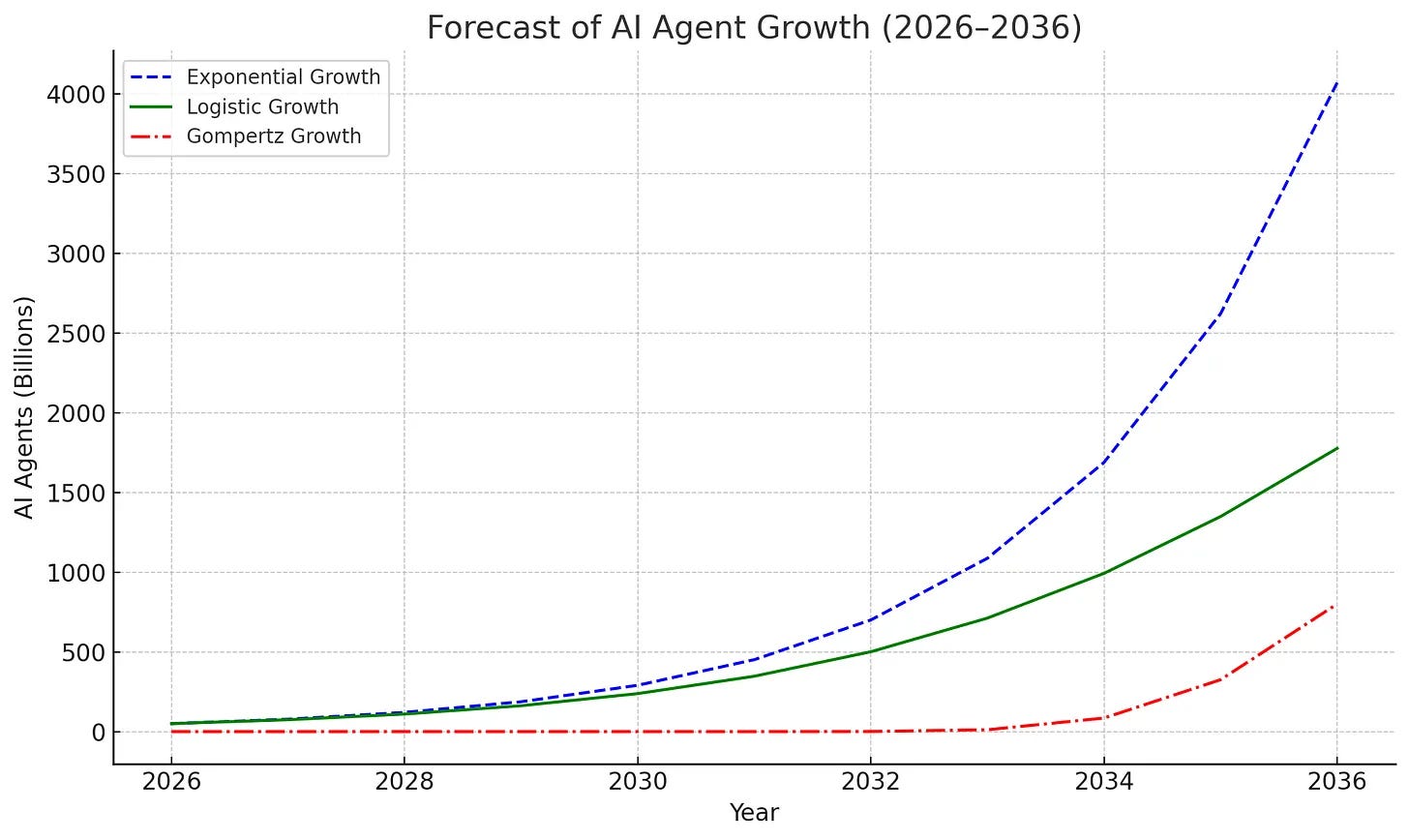
When software becomes one of the dominant consumers of internet resources, things like payments designed for human checkout will increasingly feel like the wrong abstraction.
The web spent three decades compensating for the absence of native payments. Humans could tolerate the workarounds. Agents technically cannot.
HTTP already had a status code for payment. x402 gives it a payment rail. If the agent economy develops as quickly as current usage curves suggest, fixing that thirty-year-old omission may turn out to be less about crypto and more about giving machines the economic primitive the internet never had.
Until our next adventure.
Disclaimer: This month’s edition of The API Economy has no direct affiliation with Circle. I am employed by Circle at the time of this writing, but the views in this essay are my own personal opinions and don’t necessarily represent the views of Circle.
*Special thanks to Mama Schroeder for editing this essay (any typos are on her 😊).